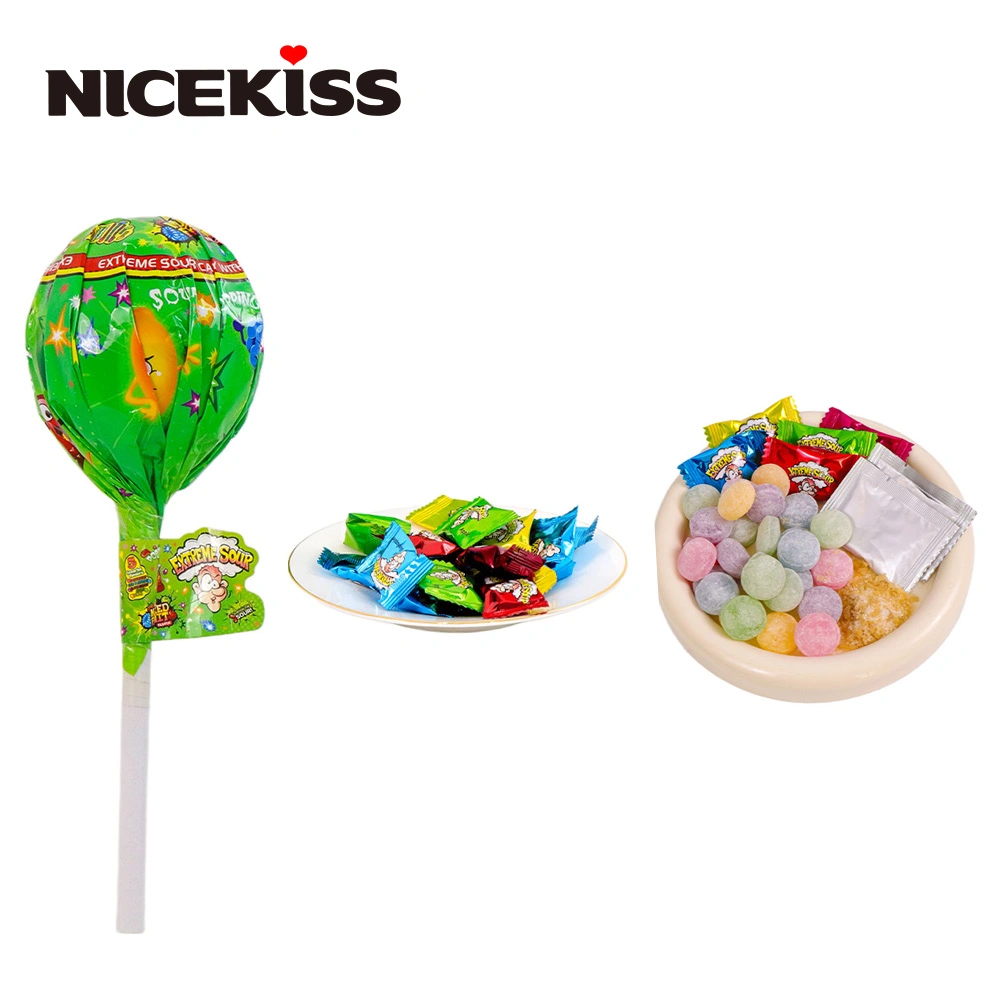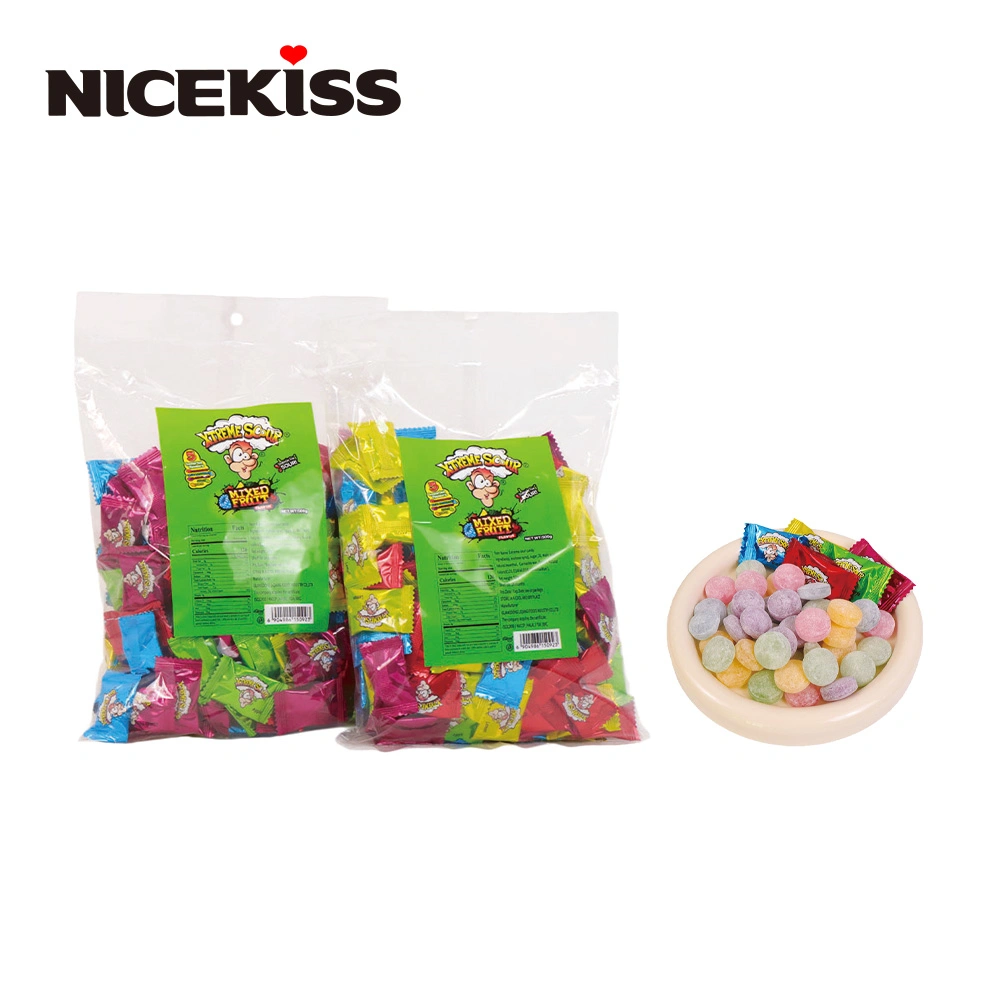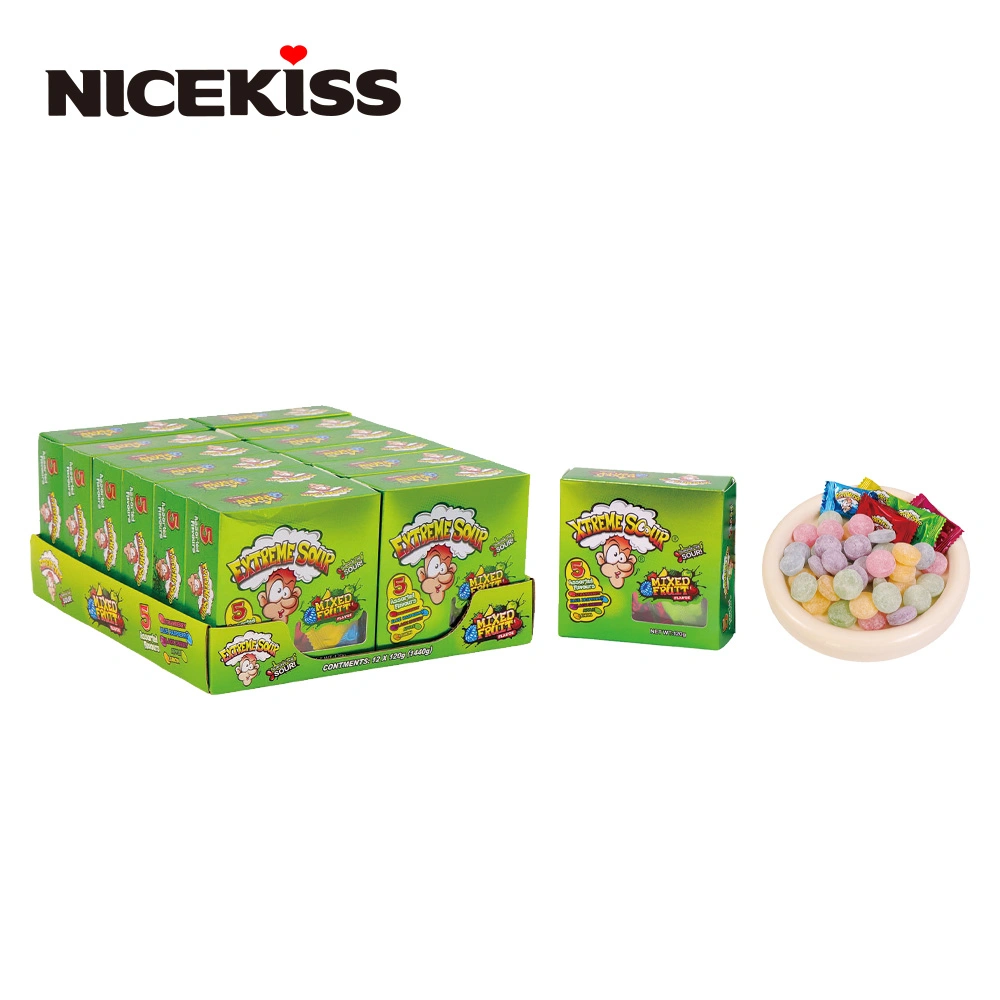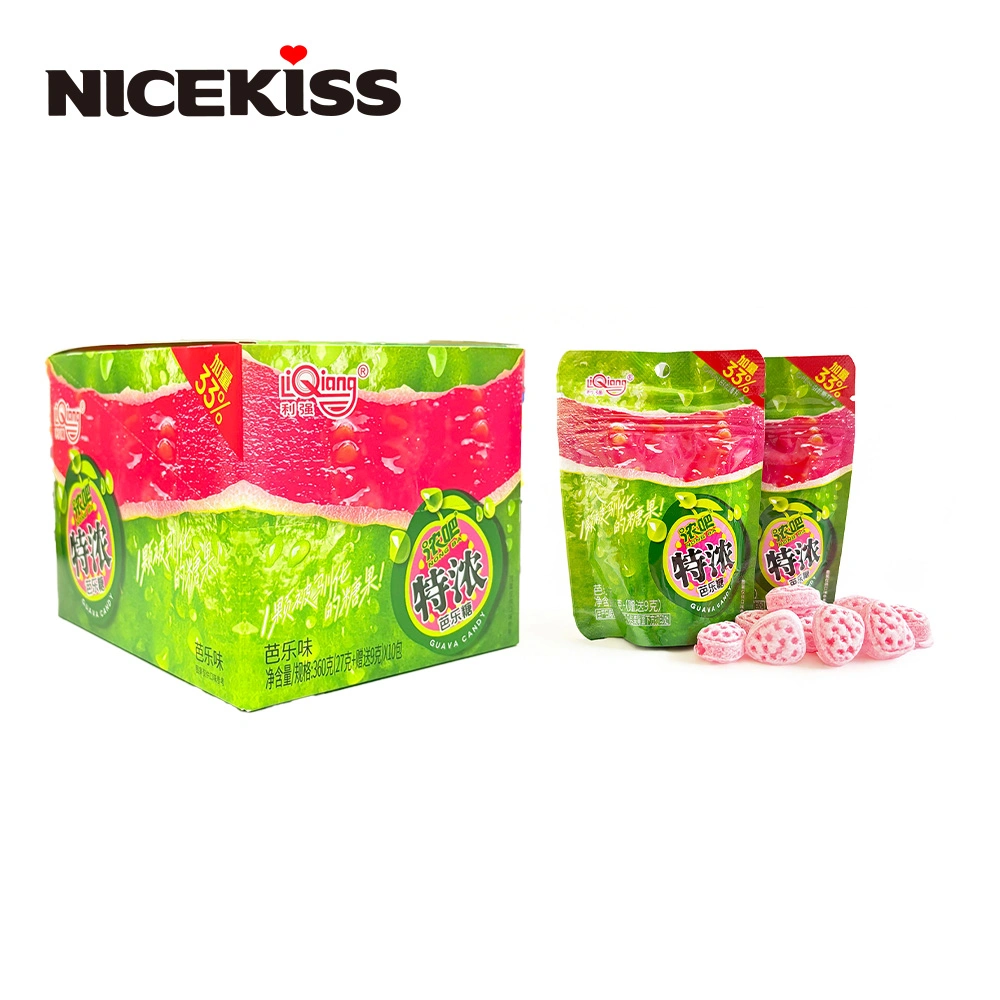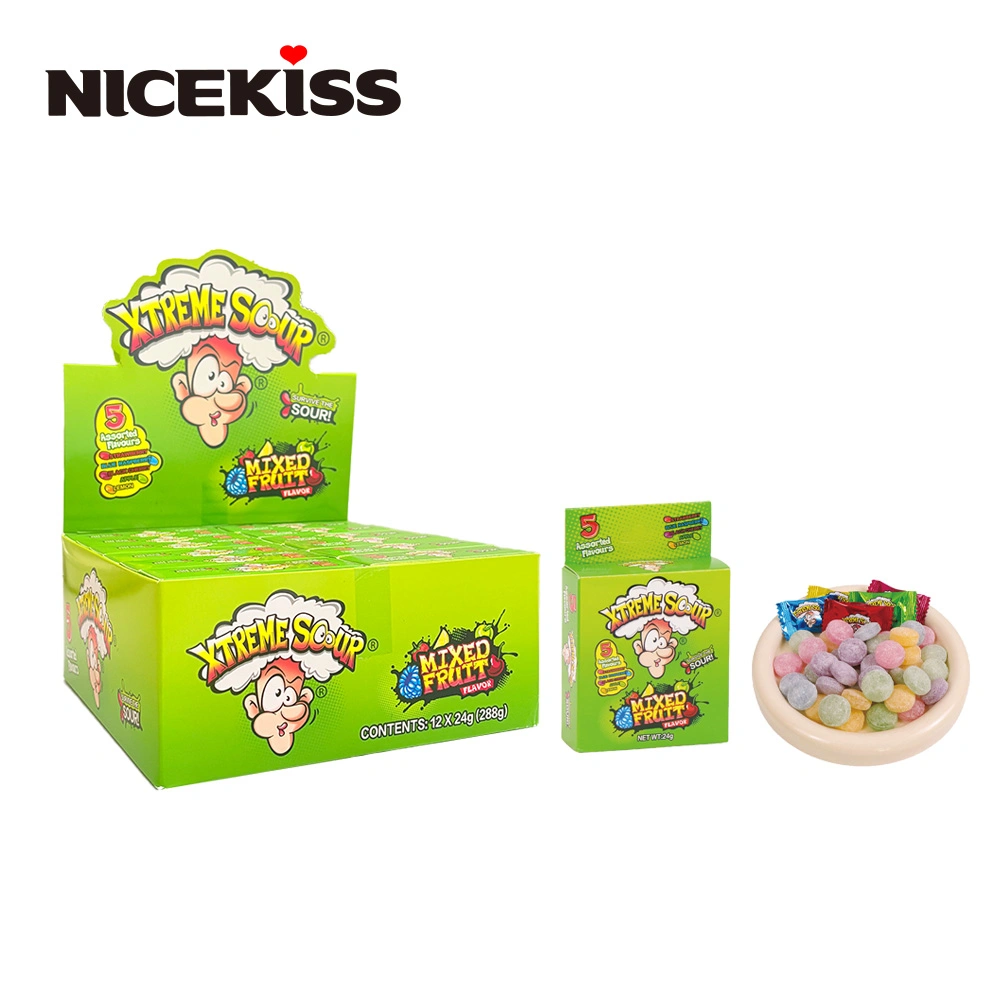






Sour candy combines sweetness with a sharp, tangy flavor that makes it different from traditional sweet candy. But what makes sour candy sour? The answer lies mainly in food-grade acids, their concentration, and how they are incorporated into the candy.
For candy brands, importers, distributors, and retailers, understanding these factors can help when selecting products, flavors, and sourness levels for different markets. This guide explains the ingredients behind sour candy, how sourness is created, and how the candy format can affect the overall eating experience.
O que é um rebuçado azedo?
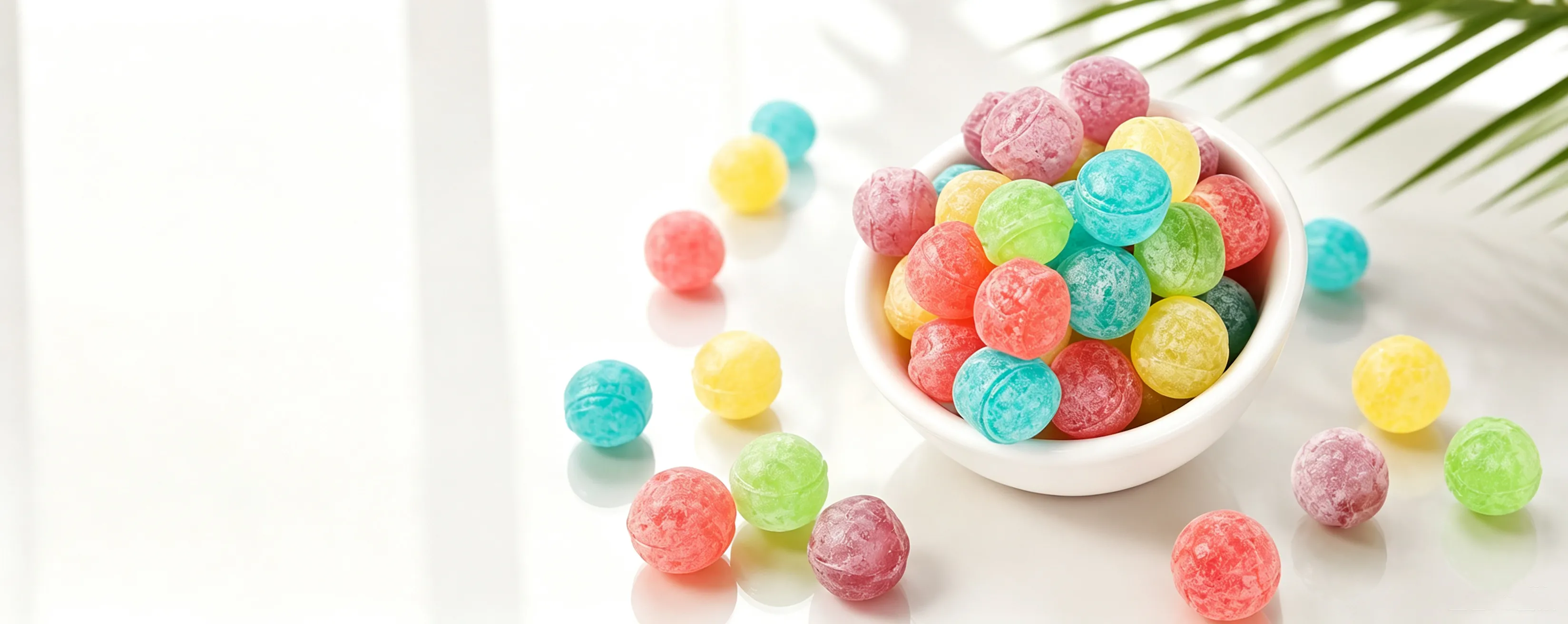
It is confectionery designed to deliver a noticeable acidic or tangy taste alongside sweetness. Depending on the product, the sour sensation can come from acids incorporated into the candy itself, a sour coating, or a combination of both.
Common types include:
- Caramelas duras e ácidas
- Doces macios e azedos
- Sour gummies
- Fruit-flavored sour candy
- Sour candy with powder coatings
- Extremely sour candy
The balance between sugar, flavorings, acids, and other ingredients determines the final taste profile. This allows manufacturers to develop products ranging from mildly tangy candy to intensely sour varieties.
What Makes Sour Candy Sour?
Food-grade acids are the primary source of the characteristic sour taste.
The most commonly used acids in sour confectionery include:
Citric Acid
Citric acid is widely associated with citrus fruits such as lemons and oranges. It produces a bright, immediate sour sensation and works well with many fruit flavors.
Because of its familiar citrus profile, citric acid is commonly used in a variety of sour candy ingredients and flavor combinations.
Malic Acid
Malic acid naturally occurs in fruits such as apples. Compared with citric acid, it can provide a longer-lasting sour sensation and is often suitable for fruit-flavored confectionery.
For products designed around a strong and lingering sour profile, malic acid can be an important part of the formulation.
Tartaric Acid
Tartaric acid is naturally found in grapes and contributes a distinctive tart flavor. It can be used when manufacturers want to create a stronger or more specific sour profile.
The choice between different acids depends on the desired flavor, sourness intensity, product format, and target consumers.
How Does Sour Candy Get Its Sour Flavor?
Sourness is not determined by the type of acid alone. Sour candy ingredients, processing methods, and the way acids are applied all influence the final eating experience.
Acid Inside the Candy
For some products, food-grade acids are incorporated into the candy during production. As the candy dissolves, the acid is gradually released, creating a sour sensation together with the candy’s sweetness and flavor.
This approach can provide a more integrated flavor profile.
Sour Coating
Another common approach is applying an acidic powder or sour coating to the outside of the candy.
When consumers first bite or dissolve the candy, the coating comes into contact with the taste receptors quickly. This can create an immediate burst of sourness before the sweeter candy center becomes more prominent.
A Combination of Both
Some products combine acids inside the candy with an external coating. This allows manufacturers to create a more complex flavor experience, with sourness appearing at different stages of consumption.
Why Does Sour Candy Taste Sour First and Sweet Later?
One of the most distinctive characteristics of sour candy is the change in flavor during consumption.
When a sour coating is present on the surface, the acids can be perceived quickly when the candy first enters the mouth. This creates the initial sour sensation.
As the coating dissolves and the candy itself becomes more prominent, the sweetness and fruit flavor may become easier to notice.
The result can be a progression such as:
Sour → Tangy → Sweet → Fruity
The exact experience depends on the candy’s formulation, texture, acid balance, and coating.
What Determines How Sour a Candy Tastes?
The sourness of candy depends on several factors rather than a single ingredient.
Type of Acid
Citric acid, malic acid, and tartaric acid can create different sour sensations. Choosing the right acid helps determine whether the product tastes bright, sharp, fruity, or lingering.
Acid Concentration
The amount and concentration of acid influence sourness intensity. A stronger formulation can create a more intense experience, while a milder formulation may be more suitable for mainstream consumers.
Sour Coating
An external coating can make sourness noticeable immediately. The amount and composition of the coating can therefore affect the first impression of the product.
Sugar-to-Acid Balance
Sweetness and sourness need to work together. Too much acidity can overpower the flavor, while too much sugar can reduce the perceived sourness.
For manufacturers, finding the right balance is important when developing consistent products for different consumer groups.
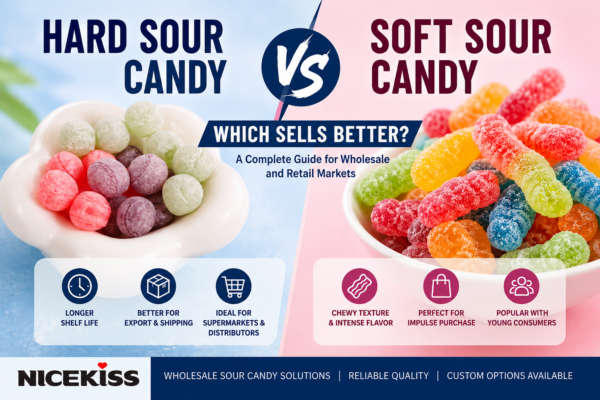
Hard Sour Candy vs Soft Sour Candy
The candy format can also influence how sourness is experienced.
Hard sour candy generally dissolves gradually, allowing the flavor to develop over a longer period. This format is often suitable for fruit flavors and products intended for longer-lasting consumption.
Soft sour candy, by comparison, provides a chewy texture and can release flavor more quickly during chewing.
The better option depends on the target market, retail channel, product positioning, and desired consumer experience.
For a more detailed comparison of these two formats, see our guide:
How Sourness Affects Consumer Preferences
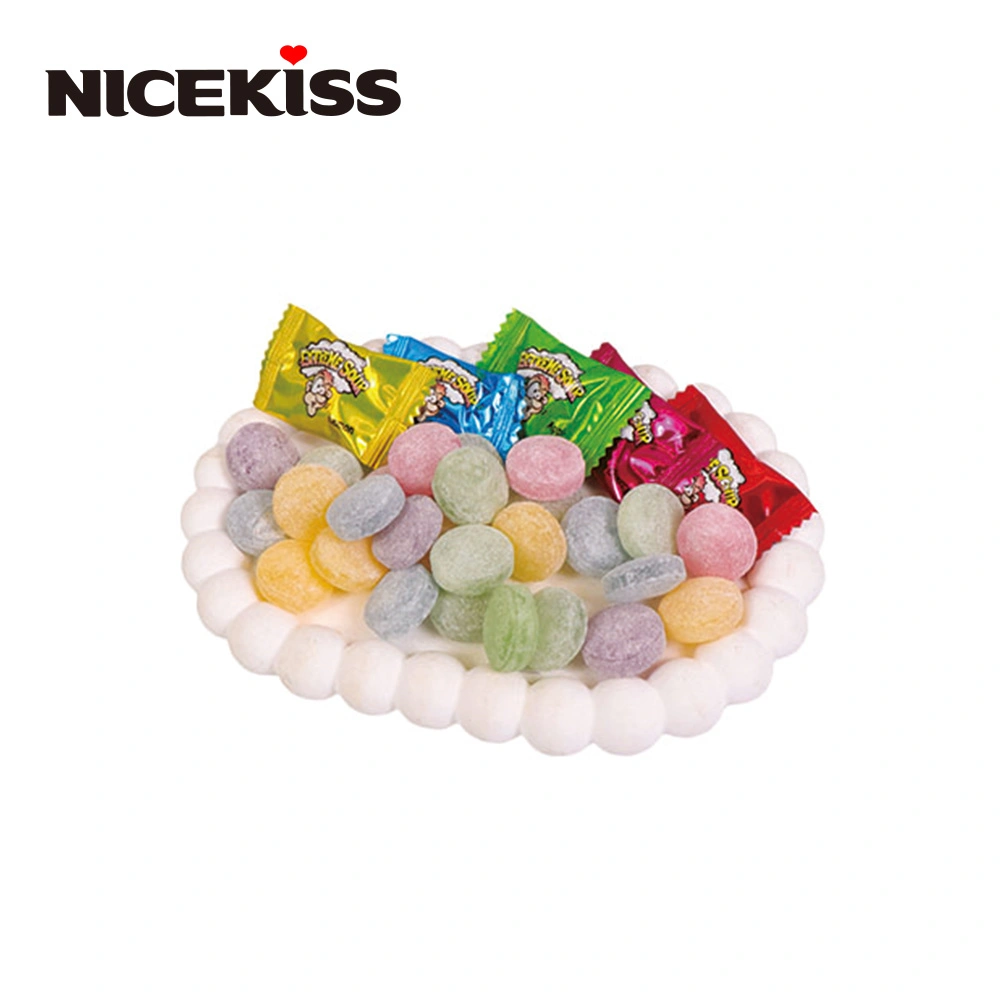
Not every consumer wants the same level of sourness. Some markets prefer a balanced combination of sweet and tangy flavors, while others are attracted to more intense products.
Mild Sourness
Mildly sour products can appeal to a broad consumer base and work well with familiar fruit flavors such as:
- Morango
- Apple
- Laranja
- Limão
- Mixed fruit
Strong Sourness
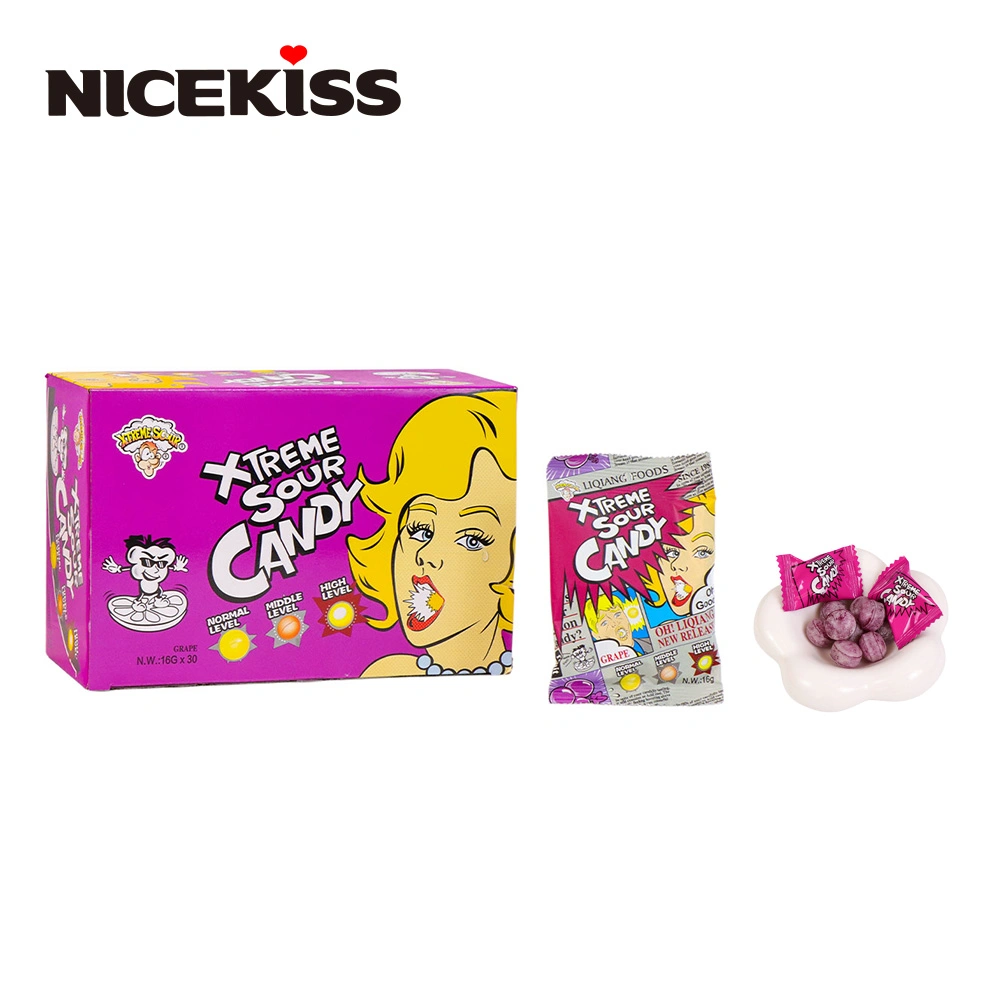
More intense products can attract consumers looking for a stronger sensory experience. Extremely sour candy can be particularly suitable for novelty products, younger consumers, and markets where bold flavor experiences are popular.
For brands selling internationally, offering different sourness levels can help address different consumer preferences rather than relying on one flavor profile.
What Should Wholesale Buyers Look for in Sour Candy?
For wholesalers and distributors, flavor is only one part of choosing the right candy product.
Consistent Sourness
Every batch should deliver a consistent flavor profile. Differences in sourness can affect consumer satisfaction and brand reputation.
Flavor Consistency
Fruit flavors should remain balanced with the sour profile rather than being completely overwhelmed by acidity.
Packaging Stability
Packaging should help protect candy from moisture and other environmental factors during transportation and storage.
Shelf Life
Buyers should consider shelf life when planning international shipping, warehouse storage, and retail distribution.
Target Market
The preferred sourness level can vary by market. A product designed for consumers who enjoy intense sour flavors may not be suitable for every retail channel.
For businesses purchasing bulk sour candy, these factors become even more important because large-volume orders require consistent quality across multiple production batches.
Trabalhar com um profissional experiente sour candy manufacturer can help buyers evaluate product specifications, packaging, and flavor options before placing larger orders.
How Manufacturers Develop Different Sour Candy Flavors
Developing a successful sour candy product requires more than simply adding acid.
Manufacturers need to consider:
- Candy format — hard, soft, gummy, or another form.
- Flavor profile — citrus, berry, apple, mixed fruit, or other flavors.
- Sourness level — mild, medium, strong, or extreme.
- Acid selection — choosing an appropriate acid or combination of acids.
- Sugar balance — maintaining a pleasant relationship between sweetness and sourness.
- Embalagem — protecting the product throughout storage and transportation.
This combination allows brands to create different sour candy experiences for different markets and consumer groups.
Perguntas frequentes
Q1: What ingredient makes candy sour?
Acids are the primary ingredients that create sourness. Citric acid, malic acid, and tartaric acid are commonly associated with sour confectionery and can produce different taste profiles.
Q2: What acid is used in sour candy?
Citric acid and malic acid are commonly used in sour candy, while tartaric acid can also be used for specific flavor profiles. The choice depends on the desired sourness and product formulation.
Q3: Why does sour candy taste sour?
Sour candy tastes sour because food acids stimulate the taste receptors responsible for detecting acidity. When these acids are combined with sugar and flavorings, they create the characteristic sweet-and-sour experience.
Q4: Can sour candy have different levels of sourness?
Yes. Manufacturers can develop different sourness levels by adjusting the formulation, acid selection, concentration, coating, and sugar-to-acid balance. This allows products to target different consumer preferences.
Conclusão
Sour candy gets its distinctive flavor from the interaction of food-grade acids, sweetness, flavorings, texture, and processing. Citric acid, malic acid, and tartaric acid can each contribute different characteristics, while sour coatings can create an immediate burst of acidity.
For brands, importers, and distributors, understanding these factors makes it easier to choose the right sourness level, flavor profile, candy format, and packaging for a specific market.
Sobre a Nicekiss
Nicekiss is a China-based candy manufacturer specializing in candy and wholesale confectionery solutions for distributors, importers, retailers, and brands. With a range of fruit-flavored and hard sour candy products, we support businesses looking for consistent quality and reliable candy supply.
Looking for the right candy for your market? Contact Nicekiss to discuss product options, bulk orders, samples, or your next candy project.